
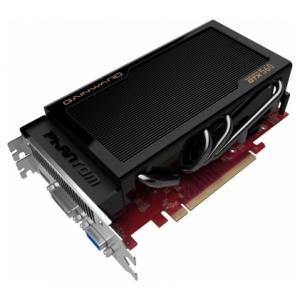
Gainward GeForce GTX 560 822Mhz PCI-E 2.0 1024Mb 4040Mhz 256 bit DVI HDMI HDCP Phantom specs.
Video cards Specs >> Gainward >> Gainward GeForce GTX 560 822Mhz PCI-E 2.0 1024Mb 4040Mhz 256 bit DVI HDMI HDCP Phantom| Specifications | | | Reviews |
Basic Specs Gainward GeForce GTX 560 822Mhz PCI-E 2.0 1024Mb 4040Mhz 256 bit DVI HDMI HDCP Phantom
Type graphics card:
office/games
Graphics processor:
NVIDIA GeForce GTX 560
Interface:
PCI-E 2.0
The code name of the graphic processor:
GF114
Celeron:
40 nm
Number of supported monitors:
2
Maximum resolution:
2560x1600
Technical characteristics Gainward GeForce GTX 560 822Mhz PCI-E 2.0 1024Mb 4040Mhz 256 bit DVI HDMI HDCP Phantom
GPU frequency:
822 MHz
The frequency of the Shader units:
1645 MHz
The amount of video memory:
1024 MB
Type VRAM:
GDDR5
Memory clock:
4040 MHz
Data bus video memory:
256 bit
Frequency due:
400 MHz
Mode support SLI/CrossFire:
yes
Connection Gainward GeForce GTX 560 822Mhz PCI-E 2.0 1024Mb 4040Mhz 256 bit DVI HDMI HDCP Phantom
Connectors:
DVI, HDCP , HDMI, VGA
Mathematics unit Gainward GeForce GTX 560 822Mhz PCI-E 2.0 1024Mb 4040Mhz 256 bit DVI HDMI HDCP Phantom
The number of universal processors:
336
Version shaders:
5.0
The number of texture units:
56
Number of blocks rasterization:
32
The maximum degree of anisotropic filtering:
16x
The maximum degree of FSAA:
32x
Standards support:
DirectX 11, OpenGL 4.1
Additional features Gainward GeForce GTX 560 822Mhz PCI-E 2.0 1024Mb 4040Mhz 256 bit DVI HDMI HDCP Phantom
Support for CUDA:
yes
The need for additional power:
Yes, 6 pin + 6 pin
Dimensions:
188x112 mm
The number of occupied slots:
3
Reviews, Questions about Gainward GeForce GTX 560 822Mhz PCI-E 2.0 1024Mb 4040Mhz 256 bit DVI HDMI HDCP Phantom
Write Review / Ask a question about Gainward GeForce GTX 560 822Mhz PCI-E 2.0 1024Mb 4040Mhz 256 bit DVI HDMI HDCP Phantom
Popular today
MSI GeForce RTX 3050 LP 6G OC G3050LP6C
GPU Model: NVIDIA GeForce RTX 3050; Stream Processors: 2304; Dedicated AI Cores: Yes; Interface: PCI Express 4.0 x16; Video RAM: 6 GB GDDR6; Video I/O: 1x DisplayPort 1.4a 2x HDMI 2.1; Power Connectio...
Manli GeForce 9500 GT 550Mhz PCI-E 2.0 512Mb 800Mhz 128 bit DVI TV HDCP YPrPb
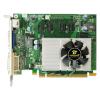
Type graphics card: office/games; Graphics processor: NVIDIA GeForce 9500 GT; Interface: PCI-E 2.0; The code name of the graphic processor: G96; Celeron: 55 nm; Number of supported monitors: 2; Maximu...
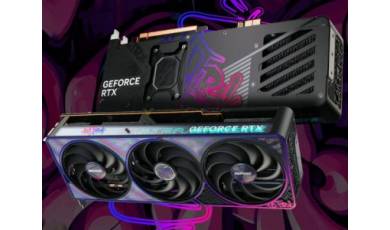
Colorful has released the iGame RTX 5070 Ti Ultra Z BLACK OC 16GB graphics card. This is an overclocked version of the model of the same name, featuring an interesting graffiti-inspired design, which can be connected to both standard and BTF motherboards.
The graphics card differs from the base version in that it is overclocked from 2295 to 2452 MHz, and if you enable an additional gaming profile, the frequency will increase even further?up to 2497 MHz. In terms of other specifications, the hardware is no different from the standard RTX 5070 Ti. Thus, the memory capacity is 16 GB (GDDR7), and the bus width is 256 bits. As a result, the speed reaches 28 Gb/s, and the bandwidth is 896 Gb/s.
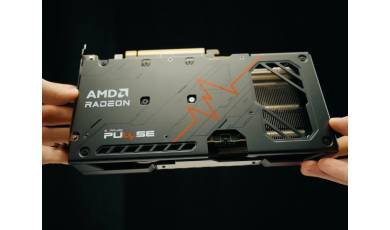
NVIDIA graphics cards are traditionally considered to be better than AMD solutions, especially in the high-end segment, but this opinion may be mistaken. The author of the YouTube channel Tech Notice showed that in some professional scenarios, the new Radeon RX 9070 can be significantly better than the much more expensive GeForce RTX 5090.
AMD, in collaboration with renowned overclocker Splave, has broken the existing GPU overclocking record. It is noteworthy that it was not the flagship model that set the new frequency ceiling, but the relatively affordable Radeon RX 9060 XT graphics card.