
Samsung Galaxy S26 became the world's first smartphone with a 2-nanometer processor |
|
 |
|
|
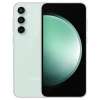
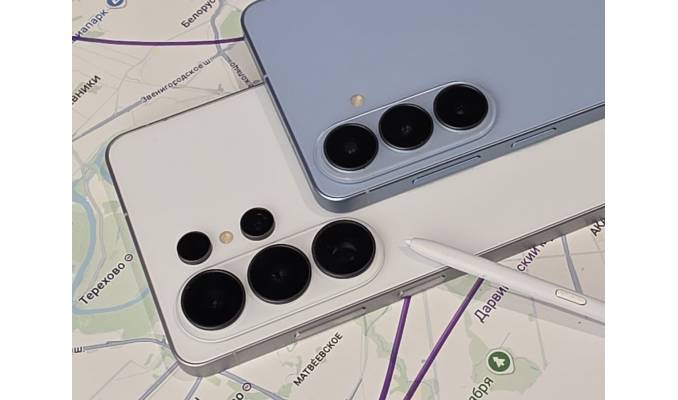
Along with the top-of-the-line Galaxy S26 Ultra, Samsung introduced more affordable models in the flagship Galaxy S26 and Galaxy S26+ series. They have the same set of AI features, but differ in specifications and are more compact in size. The Galaxy S26 is equipped with a 6.3-inch AMOLED  AMOLED, which stands for Active Matrix OLED, is a hybrid display technology that pairs the active matrix backplane from a traditional TFT display with an OLED display. As a result of their active matrix natures, AMOLED displays have faster pixel switching response times than do traditional OLED displays, which are prone to ghosting when displaying fast moving animations.screen with FHD+ resolution, while the S26+ has a larger 6.7-inch QHDQHD (Quad High Definition) is a resolution standard for high-end monitors, televisions and mobile devices. QHD is specified as 2560x1440 pixels at a16x9 aspect ratio, four times that of 720p standard high definition. Ultra wide QHD boosts the horizontal pixels to 3440 for a 21x9 aspect ratio. QHD is a resolution suitable to large-size screens. On mobile devices, given the 5.5 inch screens, QHD makes for a very high pixel density of 538dpi. QHD is on the horizon for higher end smartphones. + panel. Both models use a Dynamic AMOLEDAMOLED, which stands for Active Matrix OLED, is a hybrid display technology that pairs the active matrix backplane from a traditional TFT display with an OLED display. As a result of their active matrix natures, AMOLED displays have faster pixel switching response times than do traditional OLED displays, which are prone to ghosting when displaying fast moving animations.2X matrix with an adaptive refresh rate of 1 to 120 Hz. The dimensions of the smaller model are 149.6 x 71.7 x 7.2 mm with a weight of 167 g, while the larger model measures 158.4 x 75.8 x 7.3 mm and weighs 190 g. AMOLED, which stands for Active Matrix OLED, is a hybrid display technology that pairs the active matrix backplane from a traditional TFT display with an OLED display. As a result of their active matrix natures, AMOLED displays have faster pixel switching response times than do traditional OLED displays, which are prone to ghosting when displaying fast moving animations.screen with FHD+ resolution, while the S26+ has a larger 6.7-inch QHDQHD (Quad High Definition) is a resolution standard for high-end monitors, televisions and mobile devices. QHD is specified as 2560x1440 pixels at a16x9 aspect ratio, four times that of 720p standard high definition. Ultra wide QHD boosts the horizontal pixels to 3440 for a 21x9 aspect ratio. QHD is a resolution suitable to large-size screens. On mobile devices, given the 5.5 inch screens, QHD makes for a very high pixel density of 538dpi. QHD is on the horizon for higher end smartphones. + panel. Both models use a Dynamic AMOLEDAMOLED, which stands for Active Matrix OLED, is a hybrid display technology that pairs the active matrix backplane from a traditional TFT display with an OLED display. As a result of their active matrix natures, AMOLED displays have faster pixel switching response times than do traditional OLED displays, which are prone to ghosting when displaying fast moving animations.2X matrix with an adaptive refresh rate of 1 to 120 Hz. The dimensions of the smaller model are 149.6 x 71.7 x 7.2 mm with a weight of 167 g, while the larger model measures 158.4 x 75.8 x 7.3 mm and weighs 190 g.The smartphones are powered by the new 2nm Exynos 2600 processor. All configurations have 12 GB of RAM Random Access Memory (RAM) is the place in a computer where the operating system, application programs, and data in current use are kept so that they can be quickly reached by the computers processor. and 256 or 512 GB of storage. The hardware platform is optimized for AI functions, including image editing and information search. The new devices run on Android 16 with the proprietary One UI 8.5 shell.The main camera has a 50 MP sensor with support for 2x zoom without loss of quality. There is also a 12 MP ultra-wide-angle module and a 10 MP telephoto lens with 3x optical zoom on the back. The front camera has a resolution of 12 MP. The smartphones support AI-based image processing, including detail enhancement and scene element modification based on description. |