GIGABYTE Unveils Large-Screen Monitor with QD-OLED Panel and 240 Hz Refresh Rate |
|
 |
|
|
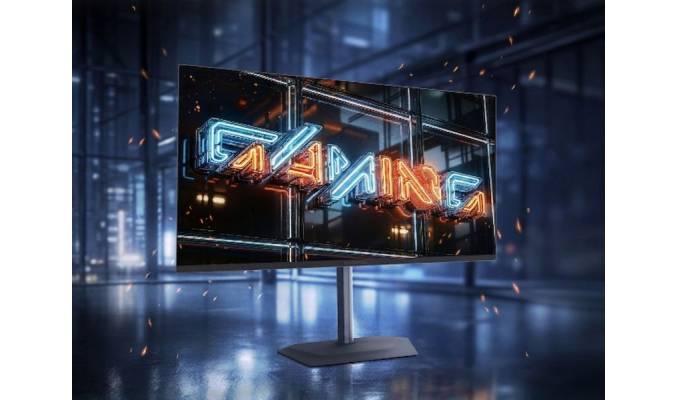
GIGABYTE has released a new gaming monitor, the MO32U24. This 32-inch model features 4K resolution, a QD-OLED panel, and a 240 Hz refresh rate?a rare combination of specifications even in the high-end segment. The device is built around a QD-OLED panel with a claimed response time of 0.03 ms and VESA ClearMR 13000 certification. The screen supports DisplayHDR True Black 500 and covers 99% of the DCI-P3 color space. The Advanced ObsidianShield coating deserves special mention?it enhances black depth while preserving color saturation and reduces the impact of ambient light, which is particularly important for OLED  OLED technology was invented by Eastman Kodak in the early 1980s. OLED panels are made from organic (carbon based) materials that emit light when electricity is applied through them. Since OLEDs do not require a backlight and filters (unlike LCD displays), they are more efficient, simpler to make, and much thinner. OLEDs have a great picture quality - brilliant colors, fast response rate and a wide viewing angle. OLEDs can also be used to make OLED lighting - thin, efficient and without any bad metals.screens. OLED technology was invented by Eastman Kodak in the early 1980s. OLED panels are made from organic (carbon based) materials that emit light when electricity is applied through them. Since OLEDs do not require a backlight and filters (unlike LCD displays), they are more efficient, simpler to make, and much thinner. OLEDs have a great picture quality - brilliant colors, fast response rate and a wide viewing angle. OLEDs can also be used to make OLED lighting - thin, efficient and without any bad metals.screens.The monitor features a set of functions designed for various scenarios. For HDR HDR stands for High Dynamic Range imaging, and it is an old photography practice recently introduced to cameraphones like the iPhone and some Android devices (or with the use of special apps). playback, a high-brightness mode is used (up to 1,300 nits peak), while for standard content, the system automatically adjusts image settings. For gaming, tools are available such as aspect ratio adjustment, motion blur reduction, and improved visibility in dark scenes.Special attention has been paid to durability and operational stability. The monitor uses passive cooling with a graphene thermal film, as well as built-in mechanisms to protect the OLED OLED technology was invented by Eastman Kodak in the early 1980s. OLED panels are made from organic (carbon based) materials that emit light when electricity is applied through them. Since OLEDs do not require a backlight and filters (unlike LCD displays), they are more efficient, simpler to make, and much thinner. OLEDs have a great picture quality - brilliant colors, fast response rate and a wide viewing angle. OLEDs can also be used to make OLED lighting - thin, efficient and without any bad metals.panel from burn-in. Standard measures are in place to reduce eye strain: blue light and flicker reduction, plus a separate function to stabilize the image at variable refresh rates.
|