
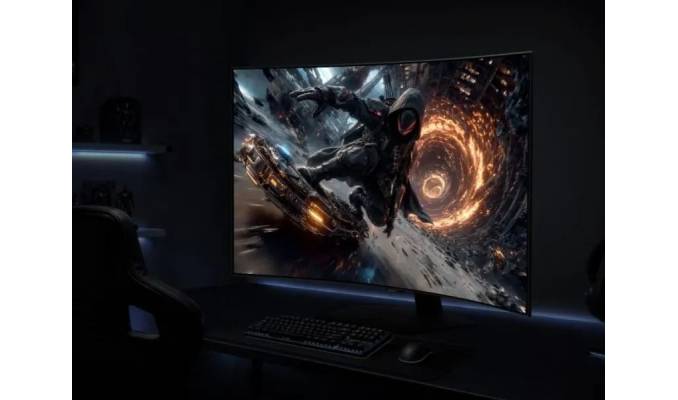
Samsung unveiled a 49-inch OLED monitor with a refresh rate of up to 720 Hz. |
|
 |
|
|
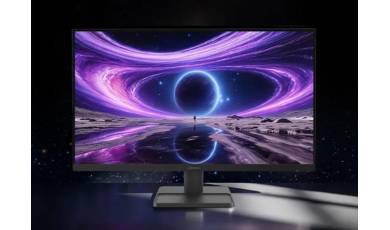
In addition to the 1100Hz Odyssey G6 , Samsung has expanded its Odyssey gaming line with three more OLED  OLED technology was invented by Eastman Kodak in the early 1980s. OLED panels are made from organic (carbon based) materials that emit light when electricity is applied through them. Since OLEDs do not require a backlight and filters (unlike LCD displays), they are more efficient, simpler to make, and much thinner. OLEDs have a great picture quality - brilliant colors, fast response rate and a wide viewing angle. OLEDs can also be used to make OLED lighting - thin, efficient and without any bad metals.monitors. The series includes the 42-inch Odyssey OLEDOLED technology was invented by Eastman Kodak in the early 1980s. OLED panels are made from organic (carbon based) materials that emit light when electricity is applied through them. Since OLEDs do not require a backlight and filters (unlike LCD displays), they are more efficient, simpler to make, and much thinner. OLEDs have a great picture quality - brilliant colors, fast response rate and a wide viewing angle. OLEDs can also be used to make OLED lighting - thin, efficient and without any bad metals.G7, the 32-inch OLEDOLED technology was invented by Eastman Kodak in the early 1980s. OLED panels are made from organic (carbon based) materials that emit light when electricity is applied through them. Since OLEDs do not require a backlight and filters (unlike LCD displays), they are more efficient, simpler to make, and much thinner. OLEDs have a great picture quality - brilliant colors, fast response rate and a wide viewing angle. OLEDs can also be used to make OLED lighting - thin, efficient and without any bad metals.G8, and the flagship 49-inch OLEDOLED technology was invented by Eastman Kodak in the early 1980s. OLED panels are made from organic (carbon based) materials that emit light when electricity is applied through them. Since OLEDs do not require a backlight and filters (unlike LCD displays), they are more efficient, simpler to make, and much thinner. OLEDs have a great picture quality - brilliant colors, fast response rate and a wide viewing angle. OLEDs can also be used to make OLED lighting - thin, efficient and without any bad metals.G9. All three models feature high refresh rates and a 0.03ms response time, while the two higher-end models use Samsung Display's new-generation QD-OLED panels, offering improved durability and sharper text. The largest in the new series is the Odyssey OLED OLED technology was invented by Eastman Kodak in the early 1980s. OLED panels are made from organic (carbon based) materials that emit light when electricity is applied through them. Since OLEDs do not require a backlight and filters (unlike LCD displays), they are more efficient, simpler to make, and much thinner. OLEDs have a great picture quality - brilliant colors, fast response rate and a wide viewing angle. OLEDs can also be used to make OLED lighting - thin, efficient and without any bad metals.G9 (G95SJ) with a 49-inch curved screen, Dual QHDQHD (Quad High Definition) is a resolution standard for high-end monitors, televisions and mobile devices. QHD is specified as 2560x1440 pixels at a16x9 aspect ratio, four times that of 720p standard high definition. Ultra wide QHD boosts the horizontal pixels to 3440 for a 21x9 aspect ratio. QHD is a resolution suitable to large-size screens. On mobile devices, given the 5.5 inch screens, QHD makes for a very high pixel density of 538dpi. QHD is on the horizon for higher end smartphones. resolution (5120x1440), 360 Hz refresh rate, and peak brightness of up to 1300 nits.This model uses fifth-generation QD-OLED with Penta Tandem and RGB Stripe, doubling the panel's lifespan and reducing ghosting around text. For maximum speed, Dual Mode is available: at a resolution of 2560x720 pixels, the refresh rate increases to 720 Hz. The Odyssey OLED OLED technology was invented by Eastman Kodak in the early 1980s. OLED panels are made from organic (carbon based) materials that emit light when electricity is applied through them. Since OLEDs do not require a backlight and filters (unlike LCD displays), they are more efficient, simpler to make, and much thinner. OLEDs have a great picture quality - brilliant colors, fast response rate and a wide viewing angle. OLEDs can also be used to make OLED lighting - thin, efficient and without any bad metals.G8 (G80SJ) features a flat 32-inch QD-OLED panel with 4K resolution and 360Hz refresh rate, VESA DisplayHDR TrueBlack 600 certification, and support for AMD FreeSync Premium Pro and NVIDIA G-SYNC Compatible.A Triple Mode is available for esports: switching to QHD QHD (Quad High Definition) is a resolution standard for high-end monitors, televisions and mobile devices. QHD is specified as 2560x1440 pixels at a16x9 aspect ratio, four times that of 720p standard high definition. Ultra wide QHD boosts the horizontal pixels to 3440 for a 21x9 aspect ratio. QHD is a resolution suitable to large-size screens. On mobile devices, given the 5.5 inch screens, QHD makes for a very high pixel density of 538dpi. QHD is on the horizon for higher end smartphones. delivers a refresh rate of 520Hz, while in Full HD, it reaches 680Hz. Like the new G9, the monitor uses fifth-generation QD-OLED technology with Penta Tandem and RGB Stripe architecture. Ports include DisplayPort 2.1, two HDMI ports, a USB Type-CWith the continued success of the USB interface, there exists a need to adapt USB technology to serve newer computing platforms and devices as they trend toward smaller, thinner and lighter form-factors. Many of these newer platforms and devices are reaching a point where existing USB receptacles and plugs are inhibiting innovation, especially given the relatively large size and internal volume constraints of the Standard-A and Standard-B versions of USB connectors. port with charging up to 98W, a USB hub, and a KVM switch.The Odyssey OLED OLED technology was invented by Eastman Kodak in the early 1980s. OLED panels are made from organic (carbon based) materials that emit light when electricity is applied through them. Since OLEDs do not require a backlight and filters (unlike LCD displays), they are more efficient, simpler to make, and much thinner. OLEDs have a great picture quality - brilliant colors, fast response rate and a wide viewing angle. OLEDs can also be used to make OLED lighting - thin, efficient and without any bad metals.G7 (G75SJ) features a curved 42-inch OLEDOLED technology was invented by Eastman Kodak in the early 1980s. OLED panels are made from organic (carbon based) materials that emit light when electricity is applied through them. Since OLEDs do not require a backlight and filters (unlike LCD displays), they are more efficient, simpler to make, and much thinner. OLEDs have a great picture quality - brilliant colors, fast response rate and a wide viewing angle. OLEDs can also be used to make OLED lighting - thin, efficient and without any bad metals.panel with 4K resolution, 165Hz refresh rate, and a 1000R curvature radius. It's the first monitor of this size with a curved 16:9 OLEDOLED technology was invented by Eastman Kodak in the early 1980s. OLED panels are made from organic (carbon based) materials that emit light when electricity is applied through them. Since OLEDs do not require a backlight and filters (unlike LCD displays), they are more efficient, simpler to make, and much thinner. OLEDs have a great picture quality - brilliant colors, fast response rate and a wide viewing angle. OLEDs can also be used to make OLED lighting - thin, efficient and without any bad metals.screen. It also boasts HDRHDR stands for High Dynamic Range imaging, and it is an old photography practice recently introduced to cameraphones like the iPhone and some Android devices (or with the use of special apps). support and a proprietary Glare-Free coating that reduces reflections and glare. According to the company, this screen area is approximately 72% larger than standard 32-inch monitors.Samsung has not yet announced availability or pricing for the new monitors. |
Source: http://


