
Xiaomi Redmi K50 Ultra specs.
Mobiles >> Xiaomi >> Xiaomi Redmi K50 Ultra| Specifications | Reviews | Secret codes |
| Unlock phone | Root phone |
| Backup | Flash Firmware | Screenshot |
| Bypass Xiaomi Account Verification |
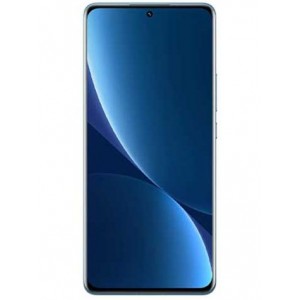
Hardware and OS Xiaomi Redmi K50 Ultra
Smart Phone OS: An operating system (OS) is software that interacts between a user and a smartphone.
An operating system (OS) is software that interacts between a user and a smartphone.Android 12, MIUI 13
Processor:
Octa-core (1x3.19 GHz Cortex-X2 & 3x2.75 GHz Cortex-A710 & 4x1.80 GHz Cortex-A510)
Chipset:Is a set of chips in the smartphone that control the CPU.
Is a set of chips in the smartphone that control the CPU.Qualcomm SM8450 Snapdragon 8 Gen 1 (4 nm)
Internal memory:
128GB 8GB RAM, 128GB 12GB RAM, 256GB 12GB RAMRandom Access Memory
Random Access MemoryExternal memory:
No
GPU:Graphics Processing Unit
Graphics Processing UnitAdreno 730
Display Xiaomi Redmi K50 Ultra
Type:
OLED
Size:
6.67" inc
Screen Resolution:Screen resolution refers to the size of the image received on the screen in pixels
Screen resolution refers to the size of the image received on the screen in pixels1080 x 2400 px
Display colors:
1B
Screen area:
107.4 cm2
Screen format:
20:9 (height:width)
Screen to body ratio:
%
PPI /points per inch/:
395 PPI
Touchscreen:
capacitive touchscreen
Connectivity Xiaomi Redmi K50 Ultra
Network:
GSM / CDMACode Division Multiple Access / HSPAHigh Speed Packet Access / CDMA2000 / LTE / 5G
Code Division Multiple Access / HSPAHigh Speed Packet Access / CDMA2000 / LTE / 5GNetwork:
2G - GSM 850 / 900 / 1800 / 1900 - SIM 1 & SIM 2
CDMA 800
3G - HSDPAHigh-Speed Downlink Packet Access 850 / 900 / 1700(AWS) / 1900 / 2100
CDMA2000 1x
4G - LTE
5G - SA/NSA/Sub6
CDMA 800
3G - HSDPA
High-Speed Downlink Packet Access 850 / 900 / 1700(AWS) / 1900 / 2100 CDMA2000 1x
4G - LTE
5G - SA/NSA/Sub6
NFC:Near field communication
Near field communicationYes
Edge:
Yes
Bluetooth:Bluetooth is used to exchange data between nearby mobile devices.
Bluetooth is used to exchange data between nearby mobile devices.5.2, A2DP, LE
SIM card:
Dual SIM (Nano-SIM, dual stand-by)
GPRS:General Packet Radio Service
General Packet Radio ServiceYes
GPS:Global Positioning System
Global Positioning SystemYes, with A-GPSAssisted Global Positioning System. Up to tri-band: GLONASSGLObal NAvigation Satellite System (1), BDS (3), GALILEOEuropean Global Navigation Satellite System (2), QZSSQuasi-Zenith Satellite System (2), NavIC
Assisted Global Positioning System. Up to tri-band: GLONASSGLObal NAvigation Satellite System (1), BDS (3), GALILEOEuropean Global Navigation Satellite System (2), QZSSQuasi-Zenith Satellite System (2), NavICWi-Fi:Wireless lan technology
Wireless lan technologyWi-Fi 802.11 a/b/g/n/ac/6e, dual-band, Wi-Fi Direct, hotspot
USB:Universal Serial Bus
Universal Serial BusUSB Type-C 2.0, USB On-The-Go
Camera Xiaomi Redmi K50 Ultra
Rear camera, main:
50 MP,
Triple
Camera specs:
50 MP, f/1.9, 26mm (wide), PDAF
-8 MP, f/2.2, 120˚ (ultrawide)
-2 MP, f/2.4, (macro)
-8 MP, f/2.2, 120˚ (ultrawide)
-2 MP, f/2.4, (macro)
Functions:
Dual-LED flash, HDR, panorama
Video:
4K@30/60fps, 1080p@30/60/120fps, 720p@960fps, HDR
Front camera, selfie:
20 MP,
Single
Functions:
HDR
Specifications:
20 MP, f/2.4, (wide), 1/2.0'', 0.8µm
Video:
1080p@30/60fps, 720p@120fps, HDR
Multimedia Xiaomi Redmi K50 Ultra
Radio:
No
Others:
24-bit/192kHz audio
-Tuned by JBL
-Tuned by JBL
Design Xiaomi Redmi K50 Ultra
Dimensions (HxWxD):
xx mm | 0 x 0 x 0 in
Weight:
0 g | 0 oz
Colors:
Black, Gray, Blue
Battery Xiaomi Redmi K50 Ultra
Battery:
5000 mAh, Li-Po, non-removable
Other features Xiaomi Redmi K50 Ultra
Sensors:
Fingerprint (side-mounted), accelerometer, gyro, compass, proximity, color spectrum , Infrared port
Fast charging 100W
-Power Delivery 3.0
-Quick Charge 3
Fast charging 100W
-Power Delivery 3.0
-Quick Charge 3
Comments, Questions and Answers about Xiaomi Redmi K50 Ultra
Ask a question about Xiaomi Redmi K50 Ultra
Honor has added the mid-range Play 80 Plus smartphone to its lineup, featuring a high-capacity battery, an IPS display, and a Snapdragon processor. It also features a dedicated button for accessing AI functions.
Following the Play 70C, Play 80 Plus, and Play 11C, Honor has released a new smartphone in the series?the 11 Plus. Its key features include an AMOLED screen with a high PWM frequency and a high-capacity battery, combined with a slim body.

Following the launch of its new tablet, HUAWEI has introduced the nova 15 Max smartphone to the global market. The device emphasizes long battery life and advanced photography capabilities, allowing users to capture high-quality images even at night.