

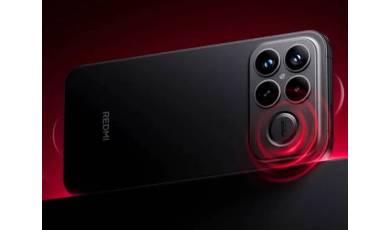
Xiaomi Poco M4 Pro specs.
Mobiles >> Xiaomi >> Xiaomi Poco M4 Pro| Specifications | Reviews | Secret codes |
| Unlock phone | Root phone |
| Backup | Flash Firmware | Screenshot |
| Bypass Xiaomi Account Verification |
Basic Spec Xiaomi Poco M4 Pro
Smart Phone OS: An operating system (OS) is software that interacts between a user and a smartphone.
An operating system (OS) is software that interacts between a user and a smartphone.Android 11, MIUI 13 for POCO
Chipset:Is a set of chips in the smartphone that control the CPU.
Is a set of chips in the smartphone that control the CPU.Mediatek Helio G96 (12 nm)
CPU:Central processing unit
Central processing unitOcta-core (2x2.05 GHz Cortex-A76 & 6x2.0 GHz Cortex-A55)
GPU:Graphics Processing Unit
Graphics Processing UnitMali-G57 MC2
Display Xiaomi Poco M4 Pro
Type:
AMOLED, 90Hz, 700 nits, 1000 nits (peak)
Screen Size:This diagonal display size is usually measured in inches.
This diagonal display size is usually measured in inches.6.43 inches, 99.8 cm2 (~84.5% screen-to-body ratio)
Screen Resolution:Screen resolution refers to the size of the image received on the screen in pixels
Screen resolution refers to the size of the image received on the screen in pixels1080 x 2400 pixels, 20:9 ratio (~409 ppi density)
Protection:
Corning Gorilla Glass 3
Storage Xiaomi Poco M4 Pro
Card slot:
microSDXC
Internal:
64GB 6GB RAM, 128GB 6GB RAM, 128GB 8GB RAM, 256GB 8GB RAMRandom Access Memory
Random Access MemoryMain Camera Xiaomi Poco M4 Pro
Triple camera:
64 MP, f/1.8, 26mm (wide), 0.7µm, PDAF
8 MP, f/2.2, 118˚ (ultrawide), 1/4", 1.12µm
2 MP, f/2.4, (macro)
8 MP, f/2.2, 118˚ (ultrawide), 1/4", 1.12µm
2 MP, f/2.4, (macro)
Features:
LED flash, HDR, panorama
Video:
1080p@30fps
Selfie camera Xiaomi Poco M4 Pro
Single camera:
16 MP, f/2.5, (wide), 1/3.06" 1.0µm
Features:
HDR
Video:
1080p@30fps
Sound Xiaomi Poco M4 Pro
Loudspeaker:
Yes, with stereo speakers
3.5mm jack:
Yes
Network connectivity Xiaomi Poco M4 Pro
Technology:
GSM / HSPAHigh Speed Packet Access / LTE
High Speed Packet Access / LTE2G:Second generation cellular network
Second generation cellular networkGSM 850 / 900 / 1800 / 1900 - SIM 1 & SIM 2
3G:Third generation cellular network
Third generation cellular networkHSDPAHigh-Speed Downlink Packet Access 850 / 900 / 1700(AWS) / 1900 / 2100 - International
High-Speed Downlink Packet Access 850 / 900 / 1700(AWS) / 1900 / 2100 - International4G:Fourth generation cellular network
Fourth generation cellular network1, 2, 3, 4, 5, 7, 8, 20, 28, 38, 40, 41 - International
Speed:
HSPA, LTE-A (CA)
WLAN:Wireless Local Area Network
Wireless Local Area NetworkWi-Fi 802.11 a/b/g/n/ac, dual-band, Wi-Fi Direct
Bluetooth:Bluetooth is used to exchange data between nearby mobile devices.
Bluetooth is used to exchange data between nearby mobile devices.5.0, A2DP, LE
Positioning:
GPS, GLONASSGLObal NAvigation Satellite System, BDS, GALILEOEuropean Global Navigation Satellite System
GLObal NAvigation Satellite System, BDS, GALILEOEuropean Global Navigation Satellite SystemNFC:Near field communication
Near field communicationYes
Infrared port:
Yes
Radio:
FM radio, recording
USB:Universal Serial Bus
Universal Serial BusUSB Type-C 2.0, OTG
Phone features Xiaomi Poco M4 Pro
Sensors:
Fingerprint, accelerometer, gyro, compass
Battery Xiaomi Poco M4 Pro
Type:
Li-Po 5000 mAh, non-removable
Charging:
33W wired, PD3.0, QC3, 100% in 58 min (advertised)
Size Xiaomi Poco M4 Pro
Dimensions:
159.9 x 73.9 x 8.1 mm (6.30 x 2.91 x 0.32 in)
Weight:
179.5 g (6.31 oz)
Build:
Glass front (Gorilla Glass 3), plastic frame, plastic back
SIM:
Dual SIM (Nano-SIM, dual stand-by)
Comments, Questions and Answers about Xiaomi Poco M4 Pro
Ask a question about Xiaomi Poco M4 Pro
