
Sony Ericsson G900 specs.
Mobiles >> Sony Ericsson >> Sony Ericsson G900| Specifications | Reviews | Secret codes |
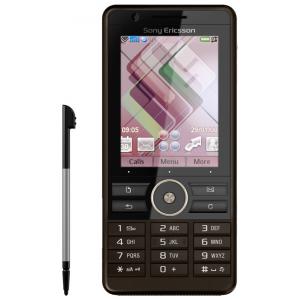
Design Sony Ericsson G900
Device type:
Smart phone
Smart Phone OS: An operating system (OS) is software that interacts between a user and a smartphone.
An operating system (OS) is software that interacts between a user and a smartphone.Symbian (9.1) UIQ 3.0
Form factor:
Candybar
Dimensions:
5 megapixels
Flash:
Yes
Features:
Autofocus, Digital image stabilization, Digital zoom
Camcorder:
Yes
Features:
Video calling
Hardware Sony Ericsson G900
Processor :
Single core, 208 MHz, ARM9
Graphics processor:
3D Graphics HW Accelerator with Open GL ES support
System memory:
128 MB RAM / 256 MB ROM
Built-in storage:
0.16 GB
Storage expansion:
Memory Stick Micro (M2)
Battery Sony Ericsson G900
Talk time:
12.00 hours
the average is 11 h (675 min)
the average is 11 h (675 min)
Stand-by time:
15.8 days (380 hours)
the average is 20 days (477 h)
the average is 20 days (477 h)
Talk time (3G):
4.00 hours
the average is 15 h (897 min)
the average is 15 h (897 min)
Stand-by time (3G):
15.8 days (380 hours)
the average is 23 days (546 h)
the average is 23 days (546 h)
Video call time:
2.50 hours
Capacity:
950 mAh
Type:
Li - Polymer
Multimedia Sony Ericsson G900
Music player Supported formats:
MP3, AAC, AAC+, eAAC+, WMA, WAV, RA
Video playback Supported formats:
MPEG4, H.263, H.264, WMV, 3GPP, RealVideo
Radio:
FM, RDS
Internet browsing Sony Ericsson G900
Browser:
Opera 8 Browser, RSS Feeds
Technology Sony Ericsson G900
GSM:
900, 1800, 1900 MHz
UMTS:Universal Mobile Telecommunications System
Universal Mobile Telecommunications System2100 MHz
Data:
GPRSGeneral Packet Radio Service, UMTS
General Packet Radio Service, UMTSGlobal Roaming:
Yes
Phone features Sony Ericsson G900
Phonebook:
Unlimited entries, Multiple numbers per contact, Picture ID, Ring ID
Organizer:
Calculator, Timer, Stopwatch, Notes, Alarm, To-Do, Calendar
Messaging:
SMS, Predictive text input (T9), MMS
E-mail:
IMAP, POP3, SMTP, Microsoft Exchange, Push e-mail
Instant Messaging:
Yes
JAVA:
Midp 2.0, CLDC 1.1
Games:
Yes
Connectivity Sony Ericsson G900
Bluetooth:Bluetooth is used to exchange data between nearby mobile devices.
Bluetooth is used to exchange data between nearby mobile devices.
2.0
Profiles:
Headset (HSP), Handsfree (HFP), Dial-up networking (DUN), Generic Object Exchange (GOEP), File Transfer (FTP), Object Push (OPP), Generic Access (GAP), Serial Port (SPP), Human Interface Device (HID), Advanced Audio Distribution (A2DP), Basic Imaging (BIP), Audio/Visual Remote Control Profile (AVRCP), Synchronization (SP)
Wi-Fi:Wireless lan technology
Wireless lan technology
802.11 b, g
USB:Universal Serial Bus
Universal Serial Bus
Yes
Charging connector:
Proprietary
Other:
Computer sync, VoIP
Other features Sony Ericsson G900
Notifications:
Music ringtones (MP3), Vibration, Phone profiles, Speakerphone
Voice recording
Regulatory Approval Sony Ericsson G900
FCC approval :
Date approved:
09 Apr 2008
FCC ID value:
PY7F3022019
FCC measured SAR :
Head:
1.39 W/kg
Measured in:
1900 MHz
Body:
1.06 W/kg
Measured in:
1900 MHz
Availability Sony Ericsson G900
Officially announced:
10 Feb 2008
Comments, Questions and Answers about Sony Ericsson G900
| Sony Ericsson G900 | August 02, 2017 | |
| How do I bypass my Sony Ericsson Phone lock after I forgot it | ||
Ask a question about Sony Ericsson G900
Honor has added the mid-range Play 80 Plus smartphone to its lineup, featuring a high-capacity battery, an IPS display, and a Snapdragon processor. It also features a dedicated button for accessing AI functions.
Following the Play 70C, Play 80 Plus, and Play 11C, Honor has released a new smartphone in the series?the 11 Plus. Its key features include an AMOLED screen with a high PWM frequency and a high-capacity battery, combined with a slim body.

Following the launch of its new tablet, HUAWEI has introduced the nova 15 Max smartphone to the global market. The device emphasizes long battery life and advanced photography capabilities, allowing users to capture high-quality images even at night.