

Google Pixel 9a specs.
Mobiles >> Google >> Google Pixel 9a| Specifications | Reviews | Secret codes |
| Unlock phone | Root phone |
| Backup | Flash Firmware | Screenshot |

Basic Spec Google Pixel 9a
Smart Phone OS: An operating system (OS) is software that interacts between a user and a smartphone.
An operating system (OS) is software that interacts between a user and a smartphone.Android 15, up to 7 major Android upgrades
Chipset:Is a set of chips in the smartphone that control the CPU.
Is a set of chips in the smartphone that control the CPU.Google Tensor G4 (4 nm)
CPU:Central processing unit
Central processing unitOcta-core (1x3.1 GHz Cortex-X4 & 3x2.6 GHz Cortex-A720 & 4x1.9 GHz Cortex-A520)
GPU:Graphics Processing Unit
Graphics Processing UnitMali-G715 MP7
Display Google Pixel 9a
Type:
P-OLED, HDR, 120Hz, 1800 nits (HBM), 2700 nits (peak)
Screen Size:This diagonal display size is usually measured in inches.
This diagonal display size is usually measured in inches.6.3 inches, 94.7 cm2 (~83.5% screen-to-body ratio)
Screen Resolution:Screen resolution refers to the size of the image received on the screen in pixels
Screen resolution refers to the size of the image received on the screen in pixels1080 x 2424 pixels, 20:9 ratio (~422 ppi density)
Protection:
Corning Gorilla Glass 3
Storage Google Pixel 9a
Card slot:
No
Internal:
128GB 8GB RAM, 256GB 8GB RAMRandom Access Memory
Random Access MemoryMain Camera Google Pixel 9a
Dual:
48 MP, f/1.7, 25mm (wide), 1/2.0", 0.8µm, dual pixel PDAF, OIS
13 MP, f/2.2, 120˚ (ultrawide), 1/3.1", 1.12µm
13 MP, f/2.2, 120˚ (ultrawide), 1/3.1", 1.12µm
Features:
Dual-LED flash, Pixel Shift, Ultra HDR, panorama, Best Take
Video:
4K@30/60fps, 1080p@30/60/120/240fps, gyro-EIS, OIS
Selfie camera Google Pixel 9a
Single camera:
13 MP, f/2.2, 20mm (ultrawide), 1/3.1", 1.12µm
Features:
HDR, panorama
Video:
4K@30fps, 1080p@30fps
Sound Google Pixel 9a
Loudspeaker:
Yes, with stereo speakers
3.5mm jack:
No
Network connectivity Google Pixel 9a
Technology:
GSM / HSPAHigh Speed Packet Access / LTE / 5G
High Speed Packet Access / LTE / 5G2G:Second generation cellular network
Second generation cellular networkGSM 850 / 900 / 1800 / 1900
3G:Third generation cellular network
Third generation cellular networkHSDPAHigh-Speed Downlink Packet Access 800 / 850 / 900 / 1700(AWS) / 1900 / 2100
High-Speed Downlink Packet Access 800 / 850 / 900 / 1700(AWS) / 1900 / 2100 4G:Fourth generation cellular network
Fourth generation cellular network1, 2, 3, 4, 5, 7, 8, 12, 14, 17, 18, 19, 20, 21, 26, 28, 32, 38, 39, 40, 41, 42, 66, 75 - International
5G:
1, 2, 3, 5, 7, 8, 12, 20, 26, 28, 38, 40, 41, 66, 75, 77, 78, 79 SA/NSA/Sub6 - International
Speed:
HSPA, LTE (CA), 5G
WLAN:Wireless Local Area Network
Wireless Local Area NetworkWi-Fi 802.11 a/b/g/n/ac/6e, dual/tri-band
Bluetooth:Bluetooth is used to exchange data between nearby mobile devices.
Bluetooth is used to exchange data between nearby mobile devices.5.3, A2DP, LE
Positioning:
GPS (L1+L5), GLONASSGLObal NAvigation Satellite System, GALILEOEuropean Global Navigation Satellite System, BDS, QZSSQuasi-Zenith Satellite System, NavIC
GLObal NAvigation Satellite System, GALILEOEuropean Global Navigation Satellite System, BDS, QZSSQuasi-Zenith Satellite System, NavICNFC:Near field communication
Near field communicationYes
Radio:
No
USB:Universal Serial Bus
Universal Serial BusUSB Type-C 3.2
Phone features Google Pixel 9a
Sensors:
Fingerprint, accelerometer, gyro, proximity, compass, barometer
Battery Google Pixel 9a
Type:
Li-Po 5100 mAh
Charging:
23W wired, PD3.0
7.5W wireless
Bypass charging (w/ "Limit to 80%" option enabled)
7.5W wireless
Bypass charging (w/ "Limit to 80%" option enabled)
Size Google Pixel 9a
Dimensions:
154.7 x 73.3 x 8.9 mm (6.09 x 2.89 x 0.35 in)
Weight:
186 g (6.56 oz)
Build:
Glass front (Gorilla Glass), aluminum frame, plastic back
SIM:
Nano-SIM + eSIM
Comments, Questions and Answers about Google Pixel 9a
Ask a question about Google Pixel 9a
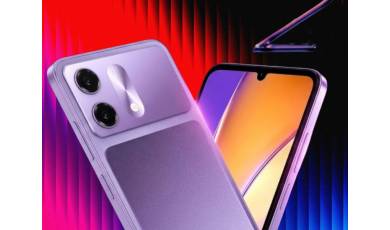
HMD has confirmed the launch date for its new budget smartphone, the Vibe 2 5G. In an official render, the company revealed the device's design, disclosed its color options, and confirmed some key specifications.
realme has officially confirmed the launch date for its new realme 16T 5G smartphone. At the same time, details about the design of the upcoming device and some of its technical specifications have been revealed.
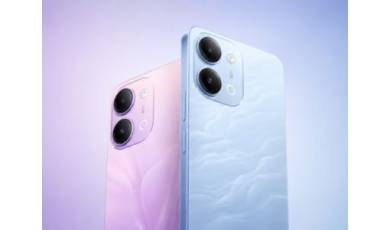
vivo has released the mid-range Y60 smartphone. Key features of the model include a durable build, a high-capacity battery with reverse charging, and a display with a high refresh rate.