

ANOKING F3 specs.
Mobiles >> ANOKING >> ANOKING F3| Specifications | Reviews | Secret codes |
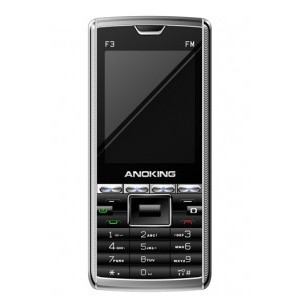
Display ANOKING F3
Primary display:
TFT 2"
Secondary display:
No
Storage ANOKING F3
Memory Card:
MicroSD, Up to 8 GB
Main Camera ANOKING F3
Primary camera:
2 MP 1600 x 1200 pixels
Video:
15fps
Selfie camera ANOKING F3
Secondary camera:
No
Sound ANOKING F3
Headphone:
No
Stand by:
Up to 350 h
Talk time:
Up to 6 h
Network ANOKING F3
EV-DO:
No
GPRS: General Packet Radio Service
General Packet Radio ServiceYes
GSM:
850, 900, 1800, 1900
EDGE:
No
Connectivity ANOKING F3
Wi-Fi:Wireless lan technology
Wireless lan technologyNo
NFC:Near field communication
Near field communicationNo
GPS:Global Positioning System
Global Positioning SystemNo
Bluetooth:Bluetooth is used to exchange data between nearby mobile devices.
Bluetooth is used to exchange data between nearby mobile devices.No
HDMI:
No
Hotknot:
No
USB:Universal Serial Bus
Universal Serial BusYes
Infrared:
No
Size ANOKING F3
Dimension:
110 x 49 x 15 mm
SIM:
Mini-SIM, Dual-SIM
Colors:
black
Comments, Questions and Answers about ANOKING F3
Ask a question about ANOKING F3
Honor has added the mid-range Play 80 Plus smartphone to its lineup, featuring a high-capacity battery, an IPS display, and a Snapdragon processor. It also features a dedicated button for accessing AI functions.
Following the Play 70C, Play 80 Plus, and Play 11C, Honor has released a new smartphone in the series?the 11 Plus. Its key features include an AMOLED screen with a high PWM frequency and a high-capacity battery, combined with a slim body.

Following the launch of its new tablet, HUAWEI has introduced the nova 15 Max smartphone to the global market. The device emphasizes long battery life and advanced photography capabilities, allowing users to capture high-quality images even at night.